COE in Singapore: Check Expiry, Renewal, and PQP Calculation

Singapore’s Certificate of Entitlement (COE) system is central to vehicle ownership. Through a bidding process, the number of cars on the road is controlled. Every vehicle owner must secure the certificate, which grants them the right to own and operate a vehicle for 10 years. Once this period ends, they must either renew the certificate or deregister the vehicle.
Keeping track of the certificate’s expiry is crucial to avoid last-minute stress, unexpected penalties, or the inability to use your vehicle. Understanding the renewal process, including Prevailing Quota Premium (PQP) calculations, allows you to plan financially and potentially reduce costs. Whether you plan to renew your Singapore COE or transition to a new vehicle, staying ahead of the process ensures a smooth and cost-effective experience.

How to Check Your Car’s Certificate of Entitlement Expiry Date
Monitoring the expiry date is crucial for avoiding unexpected disruptions and costly penalties. Fortunately, there are several convenient ways to check when your Certificate of Entitlement expires.
Methods to Check Certificate of Entitlement Expiry
The most reliable way to check your COE details is through Singapore’s Land Transport Authority (LTA) online portal. By logging into the OneMotoring website, vehicle owners can easily access the expiry date, renewal options, and other essential details related to car ownership.
If you still have a physical certificate, you can find the expiry date printed directly on it. However, as most processes have transitioned online, the LTA portal remains the most accessible and up-to-date source for verifying all the details.
Implications of Certificate of Entitlement Expiry
As your COE in Singapore nears expiry, you must decide whether to renew it or deregister your vehicle. Choosing renewal means committing to another five or ten years of ownership by paying the PQP, a sum that fluctuates with market demand.
In contrast, if you allow the certificate to lapse, your vehicle must be deregistered immediately, leaving you without a car overnight. Failing to act in time could mean scrambling for alternative transport, facing steep fines, or dealing with the stress of legal consequences. Whether it’s missing an important meeting, struggling with daily commutes, or disrupting business operations, the impact of an expired COE can be more than just an inconvenience. It can throw your routine into chaos.
When and How to Renew Your Certificate of Entitlement
Renewing your Singapore COE on time is essential for maintaining uninterrupted vehicle ownership. Since the process involves significant costs and administrative steps, understanding the timing, process, and financial impact helps with better planning.
Timing for Renewal
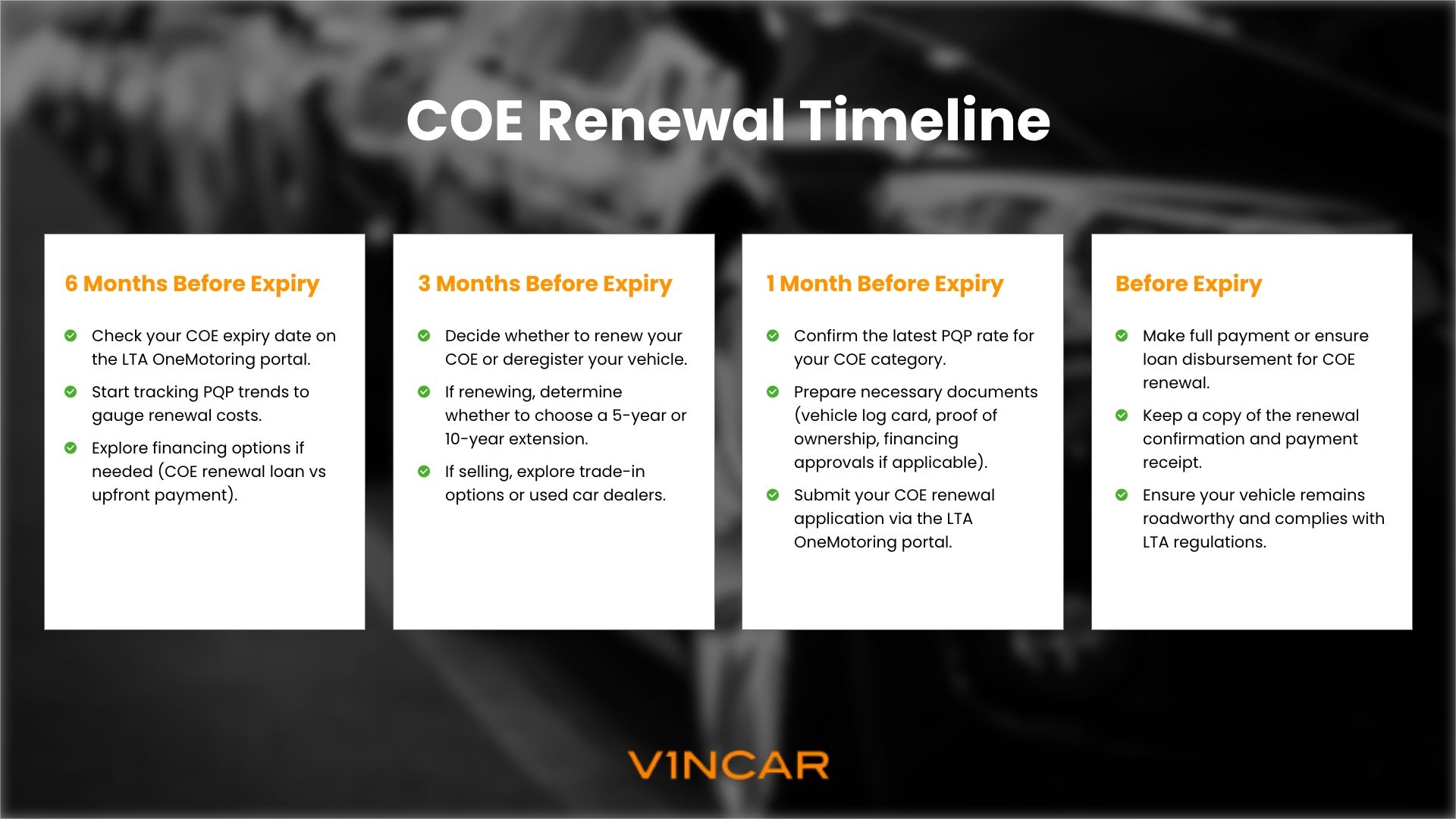
It’s best to start the renewal process at least six months before your Singapore COE expires. This gives you ample time to monitor PQP trends, explore financing options, and complete paperwork without last-minute stress.
Since PQP rates fluctuate monthly, keeping an eye on COE prices can help you decide the best time to renew. Some vehicle owners choose to renew early when rates are lower to secure a better price and avoid potential cost increases.
The Renewal Process
In Singapore, all COE renewal applications must be submitted online through the LTA OneMotoring portal. This streamlined process allows vehicle owners to complete their renewal quickly and securely in the comfort of their own homes, avoiding long queues and wasted time.
The renewal cost depends on your vehicle type and Certificate of Entitlement category. Payment options include GIRO, bank transfer, PayNow, or credit card. If you are financing the renewal with a loan, ensure the funds are arranged before proceeding.
Renewal Costs
Renewing a COE in Singapore requires paying the PQP, which is calculated as the average of the last three months’ successful bids for your vehicle category. Since prices fluctuate, renewal costs can be substantial, making early budgeting essential.
The renewal cost depends on the Certificate of Entitlement category of your vehicle:
Category A: Non-fully electric cars with engine capacities of up to 1,600cc or maximum power output of 97kW; Fully electric cars with a maximum power output of 110kW
Category B: Non-fully electric cars with engine capacities above 1,600cc or maximum power output exceeding 97kW; Fully electric cars with a maximum power output exceeding 110kW
Category C: Goods vehicles and buses.
Category D: Motorcycles.
Category E: Open category (can be used for any type of vehicle).
Preparation for Renewal
Before renewing your COE, gather the necessary documents, including the certificate, proof of vehicle ownership, and insurance details. If you are financing the renewal with a loan, additional documents, such as financing approval, may be required.
Although the renewal itself does not require a separate vehicle inspection, your car must still comply with LTA’s roadworthiness requirements. If your vehicle is subject to periodic inspections, it must pass the Vehicle Inspection Test at an authorised centre.
If paying the full renewal fee upfront is challenging, consider renewal loans from financial institutions or credit providers. These allow you to spread the cost into manageable monthly payments, easing the financial burden.

How to Calculate PQP for COE in Singapore
When renewing your COE in Singapore, you’ll need to pay the PQP. Unlike bidding for a new COE, which depends on open market demand, the PQP is based on past prices. Knowing how it works can help you budget wisely and decide if renewal is right for you.
Factors Affecting PQP Calculation
The PQP changes every month because COE prices in Singapore go up and down based on market demand. If prices are high, the renewal costs more. If prices drop, you might save money by waiting. That’s why many car owners track price trends to see if it’s better to renew early or hold off.
Another factor to consider is your car’s age and condition. Even if you renew your COE, an older car might come with higher maintenance costs. Before making a decision, it is worth comparing the cost of renewal to what you’d spend on repairs, fuel, and depreciation.
Tools for PQP Calculation
The Land Transport Authority (LTA) offers an online PQP calculator on its OneMotoring portal, allowing vehicle owners to check the latest PQP amount for their renewal period. By entering the necessary details, you can quickly determine how much you’ll need to pay.
The PQP is computed using the moving average of the last three months' successful bids in your vehicle’s category. If you prefer to work it out manually, LTA provides a formula for greater transparency.
Importance of PQP Calculation
Knowing the exact PQP amount allows you to plan your finances and avoid last-minute surprises. A sudden spike in rates could mean scrambling to cover the extra cost, while an early calculation gives you time to explore financing options and spread out payments if needed.
Paying the correct PQP is just as important. A miscalculation or missed payment could result in delays, extra paperwork, or even a lapse in your COE, leaving you unable to legally drive your car until the issue is resolved.
Next Steps After Certificate of Entitlement Renewal or Expiry
Whether you have renewed your Singapore COE or allowed it to expire, understanding your next steps is essential to avoid disruptions in vehicle ownership. If you have extended your certificate, staying updated on renewal requirements and cost trends can help with future planning. If you’ve chosen not to renew, exploring options for your next vehicle ensures a smooth transition while keeping ownership costs in check.
Renewal Options
If you’ve renewed your Singapore COE, make sure the process is fully completed through the LTA OneMotoring portal. Keep a copy of your confirmation and payment receipt for reference. Checking the latest COE results can also help you track market trends and assess whether you secured a favourable renewal rate.
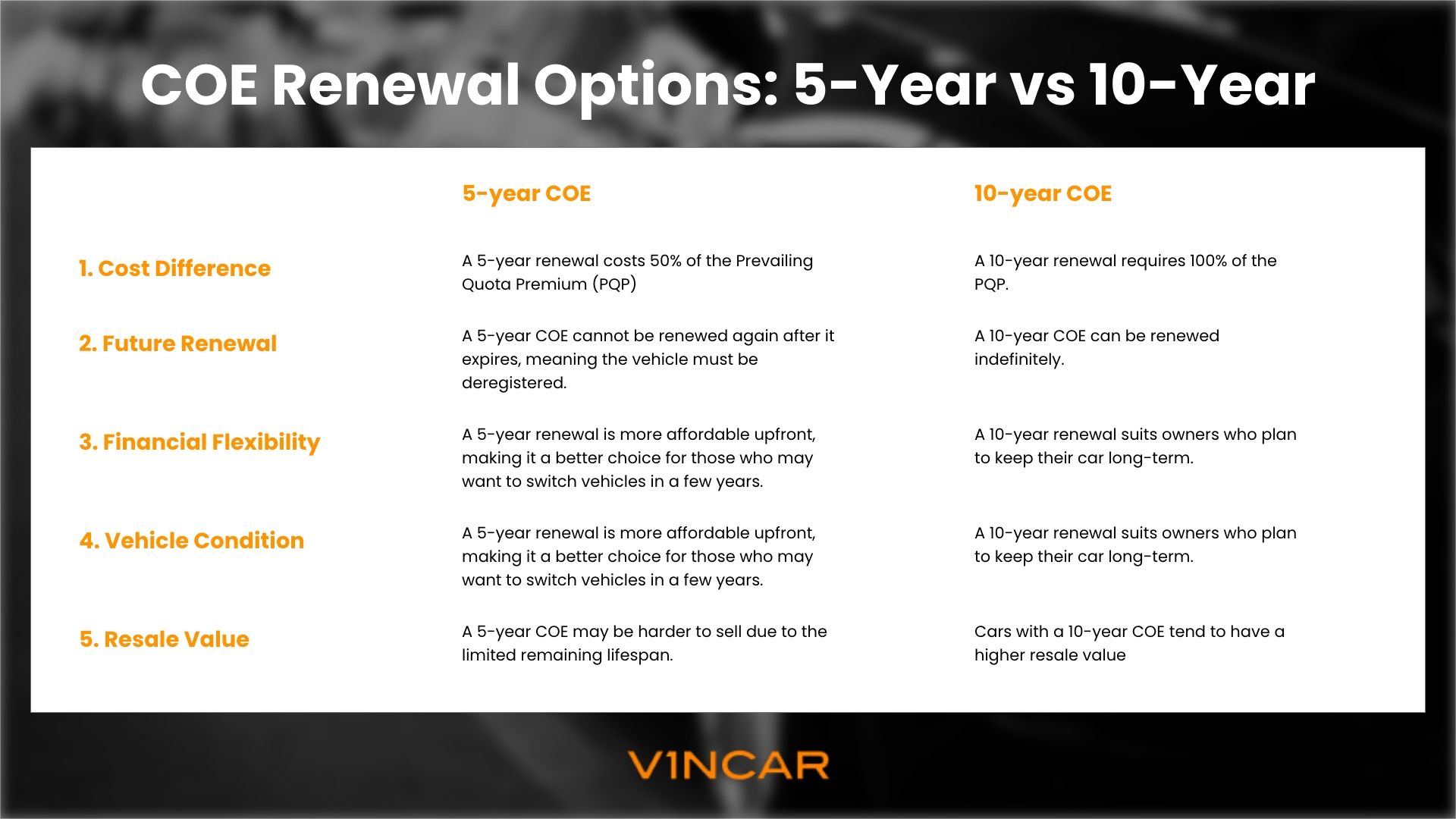
Renewal is available for either 5 or 10 years. A 10-year renewal costs more but gives you long-term stability, so you won’t have to worry about another renewal anytime soon. A 5-year renewal is much more affordable since you only pay 50% of the PQP. Nevertheless, it comes with limitations; once it expires, you can’t renew it again, and the vehicle must be deregistered.
If you financed the renewal with a loan, make sure that payments are made on time to avoid penalties. Some financial institutions offer flexible repayment plans, making it easier to manage the cost of renewal without a large upfront payment.
Keeping Track of PQP Changes
Even after renewing your COE, it’s useful to keep an eye on Singapore’s PQP trends, especially if you plan to renew another vehicle or switch to a different one in the future. Monitoring price trends can help you anticipate ownership costs and decide when to renew. If PQP rates are climbing, renewing early might be a smart move to lock in a lower rate before prices go up.
If you choose not to renew and instead buy a new or used vehicle, understanding the price movements can help you make your purchase more affordable. Many buyers track the latest COE prices to gauge market conditions before making a decision.
Understanding COE expiry, renewal timing, and PQP fluctuations is key to hassle-free vehicle ownership in Singapore. Knowing when the certificate expires, how much renewal will cost, and how the PQP changes over time helps you stay prepared, avoiding unnecessary stress and financial strain.
Starting the renewal process early gives you more control and flexibility. You’ll have time to track price trends, explore financing options, and decide whether to renew or deregister your vehicle without rushing. Since COE renewal is a significant financial commitment, proper budgeting can help you avoid unexpected costs and last-minute complications. Staying proactive ensures a smooth transition, whether you’re extending your COE or moving on to a new vehicle.
Need help with your COE renewal, vehicle purchases, or trade-ins? VINCAR is here to guide you. As a trusted Singapore car dealer, we provide expert advice and seamless solutions, whether you’re renewing your COE, buying a new car, or selling your current one.
Get in touch with us today to explore your options and find the best deals. Plan ahead, make informed decisions, and drive with confidence!
Frequently Asked Questions
1. Can I transfer my Certificate of Entitlement to another vehicle?
In Singapore, COE transferability depends on the vehicle category and bidding conditions. Certificates in Categories A, B, and D cannot be transferred once they are registered to a vehicle. However, those in Categories C and E can be transferred once, but only if they were initially bided for by an individual. If the Singapore COE was obtained under a company, business, or organisation, it cannot be transferred under any circumstances. If you deregister your vehicle, the certificate cannot be moved to another car, and you will need to participate in the bidding process to secure a new one.
2. Can I still drive my car if my Certificate of Entitlement expires, but I plan to renew it?
No, once your Singapore COE expires, you cannot legally drive the car until you have successfully renewed it. If you fail to renew in time, your vehicle must be deregistered, and continued use may result in fines or enforcement action. Always renew before the expiry date to avoid inconvenience.
3. What are my options if I can’t afford to renew my Certificate of Entitlement?
If the renewal is too costly, you have several alternatives:
- Deregister the vehicle and sell it for scrap or export.
- If it still holds value, sell the car to a dealer or direct buyer.
- Consider a renewal loan to spread out the cost over monthly instalments.
Planning and budgeting early can make the renewal easier and less stressful when the time comes.